

What is the weight of a storefront curtain wall?
Oct 02, 2025
Leave a message
Hey there! As a supplier of Storefront Curtain Walls, I often get asked about the weight of these structures. It's a crucial factor, not just for installation but also for understanding the overall load on a building. So, let's dive right in and explore what determines the weight of a storefront curtain wall.
First off, what exactly is a storefront curtain wall? Well, it's a non - load - bearing exterior wall system that's typically used in commercial buildings, especially storefronts. It's designed to keep the elements out while allowing plenty of natural light in. You can check out more about it here: Storefront Curtain Wall.
The weight of a storefront curtain wall can vary quite a bit, and it depends on several key factors. The materials used are a major determinant. For instance, if you're using glass, which is a common choice, the type and thickness of the glass play a huge role. Tempered glass, which is stronger and safer, can be heavier than regular annealed glass. A standard 1/4 - inch thick annealed glass panel might weigh around 3.2 pounds per square foot, while a 1/2 - inch thick tempered glass panel can weigh upwards of 6.4 pounds per square foot.
The frame material is another important factor. Aluminum is a popular choice for curtain wall frames because it's lightweight, corrosion - resistant, and relatively easy to work with. However, the weight of the aluminum frame can still vary depending on its profile and thickness. Some of our Exposed Aluminium Curtain Wall System has frames that are designed to be as light as possible without sacrificing strength. On the other hand, if you opt for a heavier - duty frame, say for a high - rise building or an area with harsh weather conditions, the weight will increase.

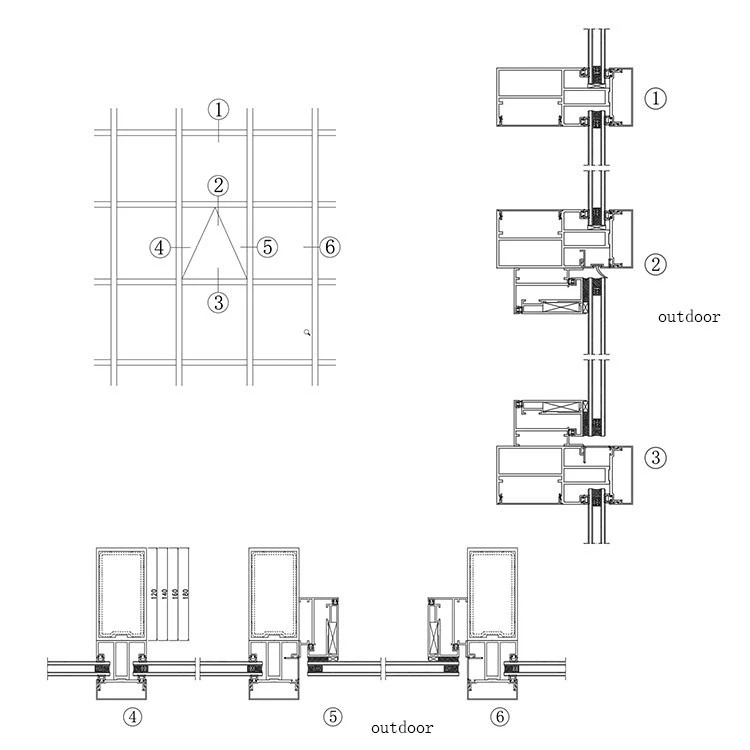
Let's talk about the size of the curtain wall. Larger curtain walls obviously require more materials, so they'll weigh more. A small storefront with a few glass panels will have a much lower weight compared to a large commercial building that wraps around an entire corner. The design complexity also matters. A simple, rectangular curtain wall will be lighter than one with lots of curves, angles, or decorative elements. For example, our Ladder System Curtain Wall has a unique design that might add a bit of weight due to its structural configuration, but it also offers enhanced stability.
Now, why does the weight matter? Well, for starters, during installation, the weight affects the equipment needed. If the curtain wall is too heavy, you might need larger cranes or more manpower to lift and install it properly. It also impacts the building's foundation. The foundation has to be designed to support the additional load of the curtain wall. If the weight isn't properly accounted for, it could lead to structural issues down the line, like cracks in the foundation or uneven settling of the building.
Another aspect is transportation. Heavier curtain walls are more difficult and expensive to transport. You need trucks with higher weight capacities, and there might be additional safety precautions required during transit. Plus, once on - site, moving the heavy components around can be a logistical challenge.
When it comes to energy efficiency, the weight can also have an impact. Heavier glass and frames can sometimes provide better insulation. A thicker glass panel, for example, can reduce heat transfer, which means lower energy costs for heating and cooling the building. However, it's a balancing act because you don't want to add too much weight just for the sake of insulation.
So, how do we calculate the weight of a storefront curtain wall? It's not as simple as just adding up the weights of the glass and the frame. You have to consider the entire system, including any seals, gaskets, and hardware. A professional engineer or a curtain wall designer will usually use software tools to calculate the exact weight based on the specific design and materials. They'll take into account all the factors we've discussed, like glass thickness, frame profile, and the overall size of the wall.
In our experience as a supplier, we've worked with all sorts of clients, from small business owners to large construction companies. Each project has its own unique requirements when it comes to the weight of the curtain wall. For a small boutique store, a lightweight curtain wall might be the best choice. It's easier to install, and it won't put too much stress on the building's structure. On the other hand, a large corporate office building might need a heavier, more robust curtain wall to withstand the elements and provide better security.
If you're in the market for a storefront curtain wall, it's important to have a clear understanding of your needs. Think about the location of your building, the climate in the area, and your budget. We're here to help you make the right choice. Whether you're looking for a lightweight, energy - efficient option or a heavy - duty, high - security curtain wall, we've got you covered.
If you're interested in learning more or want to discuss your specific project requirements, feel free to reach out. We can provide you with detailed information about the weight, cost, and installation process of our storefront curtain walls. Let's work together to create the perfect curtain wall for your building.
References
- Building Construction Handbook
- Glass and Glazing Technology Manual